Washington DC Neighborhoods: Six Areas for Visitors
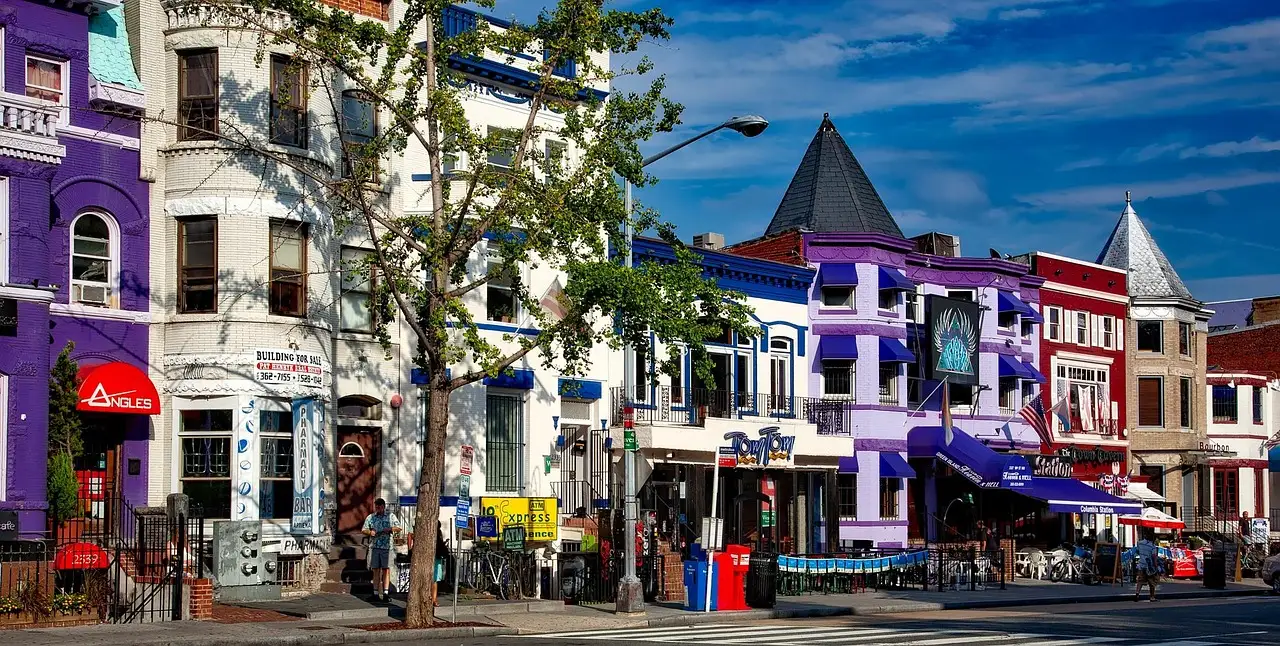
The best neighborhoods in Washington DC for visitors are Georgetown, Dupont Circle, Capitol Hill, Penn Quarter, U Street and Navy Yard. Each one has its own feel and its own Metro stop. The list below says what you find in each, how to get there and who it suits.
Washington DC neighborhoods each give you a different day, and most visitors pick two or three. Many of the signature tours of washington dc start in these areas, so the list also helps you choose a guide. Six areas follow, with the Metro stop and the best use of each.
1. Georgetown: old streets, the canal and the university
Georgetown is DC's oldest neighborhood, and Destination DC says it "must be included in any excursion of the city." It is known for cobblestone streets, the C&O Canal, Georgetown University and waterfront dining.
You reach it by Metro with a walk. Destination DC says to take the Blue, Orange or Silver Line to Foggy Bottom-GWU, then walk 15 to 20 minutes. No official page names a Metro station inside Georgetown.
The canal is the best free thing to see. The National Park Service says a replica canal boat ride runs there, and the page also shows Lock 4 and links to the Old Stone House. Tickets and dates are sold by Georgetown Heritage, so check its site first.
Georgetown is the one area here that needs a real walk, since Destination DC gives 15 to 20 minutes from the Metro and no official page ranks neighborhoods by walkability. Wikipedia, citing a 2021 Walk Score study, lists U Street, Dupont Circle and Mount Vernon Square as DC's most walkable neighborhoods, not Georgetown. On OpenStreetMap routing, Georgetown (Wisconsin Avenue and M Street) is about 2.1 miles, or roughly 45 minutes on foot, from the Washington Monument on the Mall. It suits walkers, history fans and anyone who likes shops and a river view. Plan your ride back to a Metro stop before dinner, since the walk is long.
The Georgetown history and architecture tour is from €35 per person, with a 4.9 rating from 112 reviews. The tour lasts 2 hours, shows free cancellation and is run by DC by Foot. It meets at C&O Canal Lock 3 and includes the grounds of one of the oldest houses in Georgetown and a stop at the university. A standard group has up to 12 people, and tips are not included. Book a Georgetown tour if you want the history, or walk the canal alone for free.
2. Dupont Circle and Embassy Row: mansions and embassies
Dupont Circle is the neighborhood for historic mansions, embassies and shops. Destination DC describes it as "home to historic mansions, embassies and trendy boutiques," and says the Phillips Collection is nearby.
WMATA lists the Dupont Circle station on the Red Line. Trains run toward Glenmont and Shady Grove. Embassy Row is the stretch of grand buildings the tour below walks.
Dupont Circle suits readers who like architecture, galleries and shops.
The Embassy Row architecture tour is from €35 per person, with a 5.0 rating from only 16 reviews. It lasts 2 hours and is run by DC by Foot. It meets at Dupont Circle, and a standard group has up to 14 people. Guests do not enter embassies, though they are occasionally invited in. Tips are not included.
Stay here with Hotel Madera, which Booking.com places a 2-minute walk from Dupont Circle.
3. Capitol Hill: the Capitol, the Library and Eastern Market
Capitol Hill is home to the U.S. Capitol and the Library of Congress. The area has tree-lined streets, rowhouses, the Botanic Garden, Eastern Market and Barracks Row.
The Capitol Visitor Center names three Metro stations within walking distance. They are Union Station, Capitol South and Federal Center SW. Capitol South is on the Blue, Orange and Silver lines.
Capitol Hill suits history fans and anyone on a free-sights budget. Capitol tours cost nothing, and the page for a capitol building tour shows how to book. For the museums and monuments along the Mall, see National Mall and monuments.
Eastern Market and Barracks Row are the places to eat. Go back to your base by Metro.
4. Penn Quarter and Chinatown: the central base
Penn Quarter and Chinatown is the most central neighborhood for sightseeing and evenings out. Destination DC calls it a mix of "food, culture, shopping and sports." It has museums, Ford's Theatre, the Capital One Arena and a busy bar scene.
The stop is Gallery Place-Chinatown, which Destination DC puts on the Red, Green and Yellow lines. WMATA's station page for Gallery Place shows the same three lines. Three lines meeting at one stop is why this area works well as a base.
Destination DC puts Penn Quarter and Chinatown north of Pennsylvania Avenue NW, and places Chinatown two blocks north of the Penn Quarter restaurants, marked by the Friendship Archway with 272 dragons. Its list for this area names the National Portrait Gallery, the Smithsonian American Art Museum and the United States Navy Memorial. Chinatown is known for that archway, down-home restaurants and the bar scene on Sixth and Seventh streets NW, steps from the Capital One Arena, and the station is called Gallery Place-Chinatown. For food, Destination DC names three José Andrés restaurants here, Zaytinya, Oyamel and Jaleo. No official page gives the distance from the neighborhoods to the National Mall, so these are walking routes on OpenStreetMap data to the Washington Monument, rounded and typical at a steady pace: Penn Quarter (Gallery Place) about 1.3 miles or 30 minutes, Dupont Circle about 1.6 miles or 35 minutes, Georgetown about 2.1 miles or 45 minutes, U Street about 2.2 miles or 45 minutes, Navy Yard about 2.2 miles or 50 minutes and Capitol Hill (Eastern Market) about 2.4 miles or 50 minutes. Penn Quarter is the closest of the six, so it is the one to pick as a first-time base. It suits first-time visitors who want short rides to the sights and plenty of places to eat.
The downtown area has good hotels too. Mint House Washington DC Downtown is an aparthotel by McPherson Square Metro, according to its Booking.com page.
5. U Street: music, Black history and nightlife
U Street is the heart of DC's Black heritage and jazz scene, says Destination DC. It is the birthplace of Duke Ellington. You can see the African American Civil War Memorial and museum, catch a show at the Howard Theatre and walk to the 14th Street corridor.
WMATA lists the U St station on the Green and Yellow lines. Destination DC gives the full station name as U Street/African-American Civil War Memorial/Cardozo.
U Street suits music fans and readers who want a night out. Destination DC's advice is not to travel alone late at night.
The best neighborhood is the one you can get to and from without stress.
6. Navy Yard: baseball and the river
Navy Yard is the area around Nationals Park. Destination DC lists it as Capitol Riverfront, "situated along the Anacostia River." Nationals Park anchors it, and Yards Park and the Anacostia Riverwalk Trail have waterfront dining and sunset views of the Capitol.
The stop is Navy Yard-Ballpark, a Green Line station that WMATA lists with trains toward Greenbelt and Branch Avenue.
Navy Yard suits baseball fans and readers who want river walks. The honest limit is that the classic sights sit elsewhere. Booking.com puts Coda on Half 1.2 miles from the Air and Space Museum, so you ride to the Mall.
If you want a bed here, Coda on Half is an aparthotel a 5-minute walk from Nationals Park, according to its Booking.com page.
Things to Do in Washington DC's count of GetYourGuide listings in October 2026 found 19 of 207 bookable DC-area experiences naming Georgetown, Embassy Row, U Street, Capitol Hill or Lafayette Square in the title, from €31.
How to choose from the neighborhoods in Washington DC
Choose the neighborhood by what you want to do, then take the Metro to the rest. WMATA says rail fares run $2.25 to $6.75, and nights and weekends cost $2.50 or less. Changing lines inside a station is free.
| Neighborhood | Metro stop and lines | Best for | Honest limit |
|---|---|---|---|
| Georgetown | Foggy Bottom-GWU (Blue, Orange, Silver), then a 15 to 20 minute walk | Old streets, canal, shops | No Metro stop inside |
| Dupont Circle | Dupont Circle (Red) | Mansions, embassies, a base | Not on the Mall |
| Capitol Hill | Capitol South (Blue, Orange, Silver) | The Capitol, Eastern Market | Capitol tours need planning |
| Penn Quarter | Gallery Place-Chinatown (Red, Green, Yellow) | A central base, food | Built-up downtown |
| U Street | U St (Green, Yellow) | Music, Black history | Late-night area |
| Navy Yard | Navy Yard-Ballpark (Green) | Baseball, river walks | Sights are elsewhere |
Here is the Metro stop for each area at a glance.
Picking a neighborhood is picking a base. For a full comparison of hotels and areas, see where to stay in Washington DC. To plan the rides between them, see public transport washington dc.
If you want one guide for several neighborhoods, the small-group neighborhoods walking tour is from €125 per person. The walk lasts 11.5 hours, includes a Metro 1-day pass, and has 90 minutes of free time in Georgetown. The tour has no reviews yet on GetYourGuide, so the rating is not known. It is run by Cesar Alberto, with a small group of up to 10 people. The listing says it is not suitable for people with mobility impairments, and food, admission and tips are not included. Expect a walk of 7 to 8 miles. It shows free cancellation.
Pro Tip Choose two neighborhoods that sit on the same Metro line, such as Dupont Circle (Red) and Penn Quarter (Red), so a day out needs no change of train.
Key Takeaway Destination DC sends you from Foggy Bottom-GWU on a 15 to 20 minute walk to Georgetown, so give it a half day and plan your ride home.
A sensible question is where to avoid at night. The direct answer is that no official page names any of these six neighborhoods as one to avoid, and none ranks them as safe or unsafe. Wikipedia's crime article gives only citywide figures, so a second source does not change that. Destination DC's safety page says to be alert, to remove headphones, to put phones away and not to travel alone late at night. For any block you are unsure about, DC Crime Cards from the city shows reported crime for all eight wards, updated through the current day. It is preliminary data. Check the area around your hotel before you book.
One more honest limit. You do not need a paid tour for any of this. The neighborhoods are free to walk, and the tours above help most when you want the stories behind the buildings or have only a day.
Walk the neighborhoods with a local guide
Three picks cover the areas in this list. The Georgetown history and architecture tour and the Embassy Row tour are each from €35 per person and last 2 hours. The small-group neighborhoods walking tour is from €125 per person and lasts 11.5 hours. All three show free cancellation on GetYourGuide. The neighborhoods are free to walk, so a tour pays off for the stories behind the buildings or when you have one day. The Georgetown tour is rated 4.9 from 112 reviews and the Embassy Row tour 5.0 from 16 reviews, both run by DC by Foot. The small-group tour is run by Cesar Alberto and has no reviews yet, so its rating is not known. Ratings and review counts are the ones shown on GetYourGuide.
-
Georgetown history and architecture walking tour
from €35 per person
A 2-hour walk through Georgetown's old streets, the canal and the university campus, for readers who want the story behind the buildings.
2 hours 4.9 (112 reviews) Free cancellation
Run by DC by Foot
Check availability: Georgetown history and architecture walking tour on GetYourGuide -
Embassy Row architecture and mansions tour
from €35 per person
A 2-hour walk from Dupont Circle past the mansions and embassy residences, for readers who like buildings and diplomacy.
2 hours 5.0 (16 reviews) Free cancellation
Run by DC by Foot
Check availability: Embassy Row architecture and mansions tour on GetYourGuide -
Small-group neighborhoods walking tour
from €125 per person
A long day with a guide and a Metro pass included, for readers who want to see several neighborhoods in one go and can walk 7 to 8 miles.
11 h 30 min Free cancellation
Run by Cesar Alberto · not suitable for people with mobility impairments
Check availability: Small-group neighborhoods walking tour on GetYourGuide
Prices and ratings as shown on GetYourGuide on 25 October 2026.
Georgetown and DC neighborhood walksFAQ
What are the best neighborhoods in Washington, DC?
What are the main neighborhoods in DC?
What are the rough areas of DC?
Conclusion
Pick two or three neighborhoods, not all six. Georgetown suits old streets and the canal, Dupont Circle suits mansions and embassies, Capitol Hill suits the Capitol and Eastern Market, Penn Quarter suits a central base, U Street suits music and history, and Navy Yard suits baseball and the river. Take the Metro between them, stay in the one that matches your plans, and stick to busy streets after dark.
Related guides
Sources
- Destination DC, Cool Neighborhoods in Washington, DC, last checked 25 October 2026
- Destination DC, Washington, DC Safety Information, last checked 25 October 2026
- Destination DC, Penn Quarter & Chinatown, last checked 25 October 2026
- WMATA, New rider guide, last checked 25 October 2026
- WMATA, U St station, last checked 25 October 2026
- WMATA, Gallery Place station, last checked 25 October 2026
- WMATA, Navy Yard-Ballpark station, last checked 25 October 2026
- WMATA, Dupont Circle station, last checked 25 October 2026
- United States Capitol Visitor Center, Getting to the Capitol, last checked 25 October 2026
- National Park Service, Georgetown Visitor Center (C&O Canal), last checked 25 October 2026
- DC Office of the Chief Technology Officer, DC Crime Cards, last checked 25 October 2026
- Wikipedia, Washington, D.C. (Walkability section, citing a 2021 Walk Score study), last checked 25 October 2026
- Wikipedia, Crime in Washington, D.C., last checked 25 October 2026
- OpenStreetMap data routed with OSRM (foot profile), stations to the Washington Monument, last checked 25 October 2026