Metro Washington DC Map: Stations, Fares and SmarTrip
The metro Washington DC map gives each line a color, and you pay by tapping a card at the gate. You tap in when you enter and tap out when you leave, with the same card or phone both times. The steps below cover the map, the fares, the day pass and the station for each big sight.
Step 1: Read the metro Washington DC map
The map shows each Metro line as a color, and the sign at a station tells you which lines stop there. WMATA's new rider guide says the lines are named by color, such as the Blue, Orange and Green lines. You will see the same colors on signs. The WMATA and National Park Service pages read for this guide also name the Red, Silver and Yellow lines, which makes six colors. None of those pages states a line total.
Metro is one part of public transport washington dc, next to Metrobus and taxis. This guide covers the train.
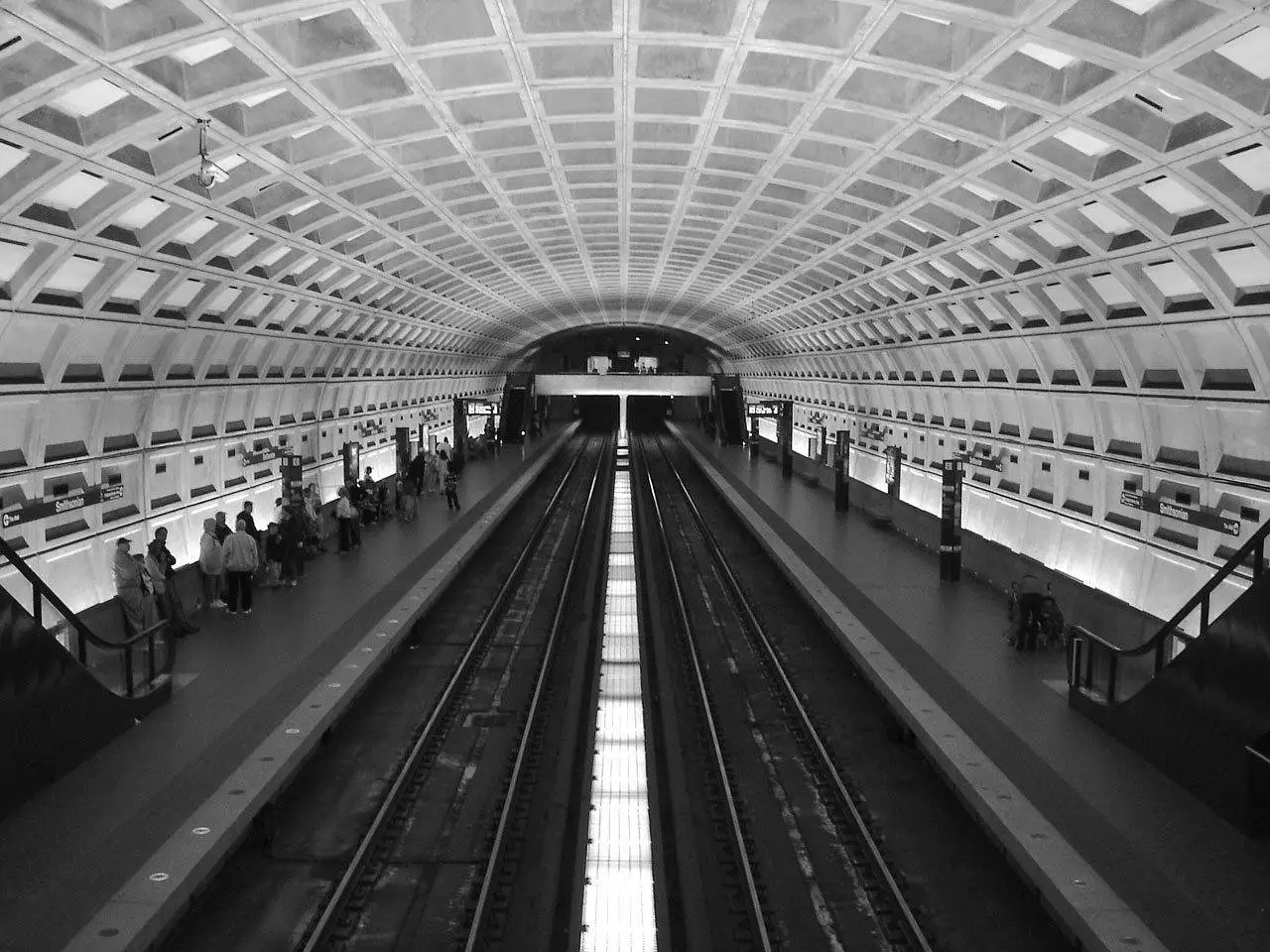
Spot a station by its tall brown column with a large M on it. Colored stripes or dots on the column show which lines serve that station. Inside, follow the signs to the platform for your line. In some stations, trains in each direction use different platforms, so check the direction on the sign.
Get the map on your phone. Station locations show in Metro Pulse, Google Maps and Apple Maps. WMATA's maps and schedules page also links to its Trip Planner and real-time train information.
Most trains run on these general hours. WMATA says to use its rider tools for the exact first and last train.
| Day | General hours |
|---|---|
| Monday to Thursday | 5 am to midnight |
| Friday | 5 am to 2 am |
| Saturday | 6 am to 2 am |
| Sunday | 6 am to midnight |
If something feels wrong, tell staff or Metro Transit Police. WMATA lists 202-962-2121, or text MYMTPD (696873), to report suspicious activity or an unattended item.
Key Takeaway Read the line by its color and read the station by its brown column with the large M.
| Step | What to do | What to watch for |
|---|---|---|
| 1 | Find your line color and station on the map | Check the direction on the platform sign |
| 2 | Get a SmarTrip card or use a contactless card | Use the same one to tap in and out |
| 3 | Check the fare or buy a day pass | Weekday daytime fares cost the most |
| 4 | Pick the station for your sight | No station stands at the Lincoln Memorial |
| 5 | Decide on the Metro or a sightseeing bus | Compare the walk, the cost and the time |
Step 2: Pay with SmarTrip or a contactless card
You pay by tapping a SmarTrip card, a phone wallet or a contactless bank card at the faregate. WMATA's fare page says to tap at the start and at the end of your trip. Use the same payment when you enter and exit.
Here is the whole ride in one picture.
SmarTrip also lives in the wallet on your phone or watch. Or buy a SmarTrip card at a fare vending machine in any rail station. A pass bought on a new card adds a $2 new card fee.
On a Metrobus, tap when you board. Coins or $1 bills work too, but drivers cannot make change.
Changing trains is free. Moving from one rail line to another inside a station costs nothing. With SmarTrip or a contactless card, a transfer from rail to bus is free within two hours.
Children are free in small numbers. WMATA lets you bring up to two children under 5 years old on Metro for free.
Pro Tip Tap with a contactless bank card or a phone wallet, and you skip the fare vending machines at the station.
Step 3: Check the fare and the day pass
A Metro rail ride costs $2.25 to $6.75 on weekdays from 5 am to 9:30 pm, according to WMATA's fare page. The fare depends on the service, the ride length, the day and the time.
| Ride | Price |
|---|---|
| Rail, weekday 5 am to 9:30 pm | $2.25 to $6.75 |
| Rail, weekday after 9:30 pm | $2.25 to $2.50 |
| Rail, weekend | $2.25 to $2.50 |
| Metrobus, regular and limited-stop routes | $2.25 |
| Metrobus, express routes F19, F28, F81 and F83 | $4.80 |
For a long ride the top fare applies. The Dulles airport page lists $6.75 from Dulles to Metro Center. WMATA's Trip Planner gives the exact fare for any trip.
A day pass can save money if you ride a lot. In 2026, a one-day Metro rail and bus pass cost $13.50 in Washington, DC, so it pays off from the sixth ride at the lowest rail fare, in the 2026 Washington, DC Travel Cost Study.
The pass is simple to use. WMATA's pass page says it activates on first use, not on the day you buy it. It expires at the end of the last consecutive operating day. You can buy it in Apple Wallet or Google Wallet, or at a fare vending machine.
The pass is the wrong choice on a light day. If you plan only a few short rides, paying per ride costs less. Most Mall sights sit close together, so many visitors ride only twice.
Step 4: Pick the station for each sight
Each big sight has a station, but a few sit a long walk away. The table uses what the National Park Service, the Capitol Visitor Center and the airports state.
| Sight | Station | What the source says |
|---|---|---|
| Lincoln Memorial | Foggy Bottom-GWU (Blue, Orange, Silver) | About 0.8 miles to the memorial |
| Lincoln Memorial, other option | Smithsonian (Blue, Orange, Silver) | About 1.2 miles to the memorial |
| White House | Federal Triangle (Blue, Orange, Silver) or Metro Center (Red, Blue, Orange, Silver) | The two closest stations, no distance given |
| US Capitol | Union Station, Capitol South or Federal Center SW | All three are within walking distance |
| Arlington National Cemetery | Arlington Cemetery | A 5-minute walk to the main entrance |
| Arlington, north gate | Rosslyn | A 15-minute walk to the Ord and Weitzel Gate |
No Metro station stands at the Lincoln Memorial. The National Park Service lists Foggy Bottom-GWU as the closest, at about 0.8 miles. Plan for a long walk, or ride a bus or a tour for that stretch. The Blue, Orange and Silver lines serve both Foggy Bottom-GWU and Smithsonian, so those are the lines for the western and central Mall. For what stands along the Mall, see National Mall and monuments.
For the Capitol, the Capitol Visitor Center names three stops within walking distance. They are Union Station, Capitol South and Federal Center SW. Capitol tours are free, and the page for a capitol building tour shows how to book.
For Arlington, the cemetery's visit page says the Arlington Cemetery stop is a 5-minute walk from the main entrance at 1 Memorial Ave. Metro riders go through standard screening at the Welcome Center.
The airports also reach the Metro. Reagan National has a raised station joined to the Terminal 2 concourse, with two enclosed bridges. From Terminal 1, you board an airport shuttle bus to the station. Dulles has a Silver Line station. The airport says the ride to Rosslyn takes about 50 to 55 minutes, and you change there to the Blue Line for Reagan.
For the White House, the National Park Service names Federal Triangle and Metro Center as the closest stations, without a walking distance.
Some sights are not covered here. The National Park Service pages for the Washington Monument and the Mall say you can reach them by Metro, but they do not name a station. No official page read for this guide gives a distance from a station to each Smithsonian museum. Use the Trip Planner for those.
If the long walk is the problem, a tour can fill the gap. The monuments and American history e-cart tour runs 2 hours and is from €46 per person, with a 4.7 rating from 621 reviews. It meets at 333 G St NW and lists free cancellation. The listing says groups can be up to 100 people, and that pushchairs and walkers are not permitted. Tickets for paid monuments, food and tips are not included.
The open-air cruiser tour rides between the memorials by day and by night. It also runs 2 hours and is from €46 per person, with a 4.8 rating, but from only 15 reviews. Both tours are run by Charlotte City Tour, according to the listings. The cruiser also meets at 333 G St NW and lists no group size. Its listing leaves out food and drinks and transport to the starting point.
Step 5: Choose the Metro or a sightseeing bus
The Metro is the cheaper way to cross the city, and a sightseeing bus is the easier way to stop at the sights. The Mall works on foot and by train for the cost of a few fares, and most headline sights are free. On your own, the Metro and your feet cost a few fares and need a little planning. A paid loop makes sense when you want commentary, short rides and no station planning.
For a paid loop, see the Old Town Trolley and DC Duck Tours on our hop-on hop-off page. The Old Town Trolley city tour is from €49 per person, with a 4.2 rating from 735 reviews. It shows free cancellation and is run by Historic Tours of America. It meets at 50 Massachusetts Ave NE.
The listing offers a 1-day or 2-day ticket with unlimited on and off at its popular stops. It adds a live English-speaking guide and stadium seating. Tips are not included, and neither is food. The Arlington tram tour is an upgrade, and the transport between the trolley and the cemetery tour is not included.
Things to Do in Washington DC's count of GetYourGuide listings in October 2026 found 6 hop-on hop-off listings out of 207 bookable DC-area experiences, from €19.
One honest limit. Metro fares can change, and WMATA's pages do not say when. Check WMATA's fare page for today's price before you buy a pass.
A city feels smaller once you know which station to get off at.
Skip the station planning with a sightseeing ride
These three picks cover the sights without a station for each stop. The Old Town Trolley is from €49 per person, and the monuments e-cart tour and the open-air cruiser tour are each from €46. All three show free cancellation on GetYourGuide. The trolley meets at 50 Massachusetts Ave NE, and both 2-hour tours meet at 333 G St NW.
-
Old Town Trolley hop-on hop-off
from €49 per person
A paid loop with unlimited on and off at its popular stops, for days when you do not want to plan Metro stations.
1 day 4.2 (735 reviews) Free cancellation
Run by Historic Tours of America** - Wash. DC
Check availability: Old Town Trolley hop-on hop-off on GetYourGuide -
Monuments and American History e-cart tour
from €46 per person
A 2-hour guided ride along the Mall memorials, which have no Metro station at their door.
2 hours 4.7 (621 reviews) Free cancellation
Run by Charlotte City Tour
Check availability: Monuments and American History e-cart tour on GetYourGuide -
Day and night open-air cruiser tour
from €46 per person
A 2-hour ride between the memorials for readers who do not want to walk from Foggy Bottom or Smithsonian station.
2 hours 4.8 (15 reviews) Free cancellation
Run by Charlotte City Tour
Check availability: Day and night open-air cruiser tour on GetYourGuide
Prices and ratings as shown on GetYourGuide on 25 October 2026.
Hop-on hop-off, trolley and bus toursFAQ
How much does the Washington, DC Metro cost?
How do I ride the Washington, DC Metro?
What Metro station is closest to the Lincoln Memorial?
What Metro station is closest to the White House?
Conclusion
The Metro is simple once you know four things. Lines are colors, you tap in and out with the same card or phone, a ride costs $2.25 to $6.75 on weekdays, and no station stands at the Lincoln Memorial. Ride the train between the sights that sit close to a station. Add a sightseeing loop or a guided tour for the stretch where you would otherwise walk a long way.
Related guides
Sources
- WMATA, Metrorail and Metrobus fares, last checked 25 October 2026
- WMATA, Metro passes, last checked 25 October 2026
- WMATA, Maps and schedules, last checked 25 October 2026
- WMATA, New rider guide, last checked 25 October 2026
- National Park Service, Lincoln Memorial directions and transportation, last checked 25 October 2026
- Arlington National Cemetery, Plan your visit, last checked 25 October 2026
- United States Capitol Visitor Center, Getting to the Capitol, last checked 25 October 2026
- Washington Dulles International Airport, Silver Line FAQs, last checked 25 October 2026
- National Park Service, The White House and President's Park directions, last checked 25 October 2026
- Reagan National Airport, Metrorail station, last checked 25 October 2026